Falling hydrocarbon prices brought serious damages to the global petrochemical industry, leading to a decline in prices of finished products. Those hit the hardest were regions that relied on relatively cheap and accessible feedstock. As a result, according to the 11th Annual Gulf Petrochemicals and Chemicals Association (GPCA) Forum, the aggregate revenue of the GPCA's member companies dropped by 8.9% to USD 79.7 bn in 2015.
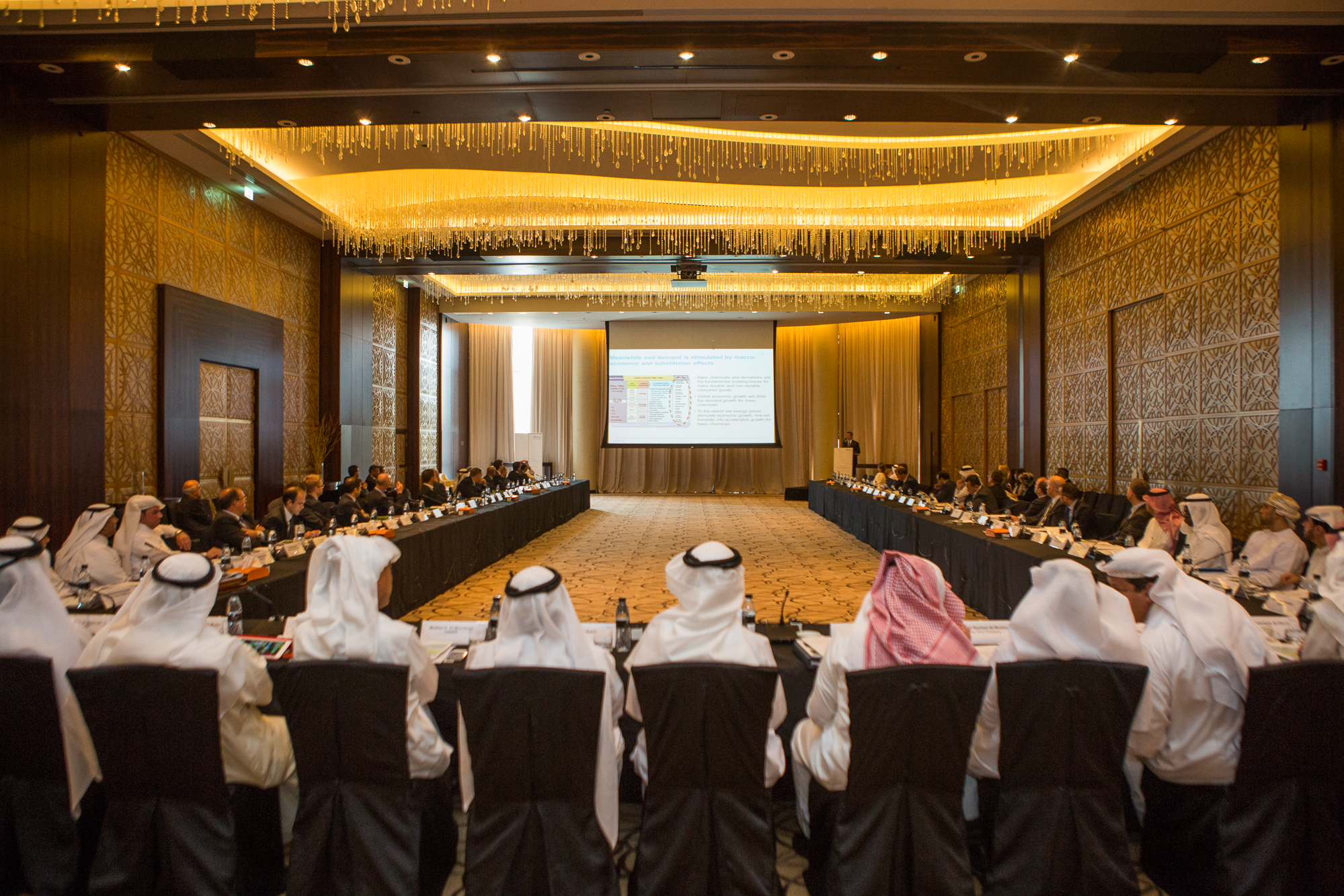
Although today the Middle East remains a major petrochemical producing region worldwide, the GPCA Forum participants agreed that in absence of a profound policy change it may gradually lose its competitive edge. Dow Chemical Company’s President James Fitterling compared the market situation to a tsunami aftermath, urging the Middle Eastern companies to seek operational and functional efficiency improvements.
According to Wood Mackenzie’s estimates, in 2015, West European and East Asian companies reduced their ethylene production cash costs fr om USD 1,000 to USD 600 per tonne, while the costs of the Middle Eastern producers remained flat at USD 200 per tonne. The lower feedstock prices wiped out a significant share of the region’s advantages, with logistics taking a heavy toll not only on profits, but also on the competitiveness.
According to the GPCA, primary feedstock products account for 70% of all petrochemicals marketed by local producers. For instance, the region is home to around 50% of the global ethylene production capacity. Eelco Hoekstra, CEO of the Dutch logistics company Vopak, believes that by 2030, the global ethylene market will expand to 232 mtpa compared to 143 mtpa in 2016, driven predominantly by growing urbanisation in Africa and Asia, wh ere approximately another billion people will be moving to cities and towns. At the same time, growth in selling prices will be constrained by larger production capacities.
In absence of a profound policy change the Middle East may gradually lose its competitive edge
The US shale gas revolution and China's coal gasification have also brought a dramatic change to the feedstock supply landscape in the petrochemical sector. The Middle East exports up to 80% of its petrochemical output, so non-domestic demand is key for the industry's future. Today, China is the major consumer of the region’s petrochemicals, and Wood Mackenzie is certain that growing household income and shrinking inequality in the country will be a key driver for its growing petrochemical demand going forward. By 2035, the number of households with an income of over USD 10,000 is expected to grow to 390 million compared to 140 million in 2014, and by 2025, approximately 110,000 families will have a car. According to GPCA’s estimates, global demand for petrochemicals in the next few years will be growing at a rate of 4–4.5% a year, faster than the global economy.
However, this optimism is not shared by everyone. David Hughes, Senior Vice President at International eChem, says that by 2030, a third of the world’s population will be aged over 55, i.e. in a group that has a considerably lower purchasing power than people between 25 and 54. By 2030, the median age of China's population will be 47.1 against 39.9 in the US. The demographic shift will have a major impact on the markets, including polymers.
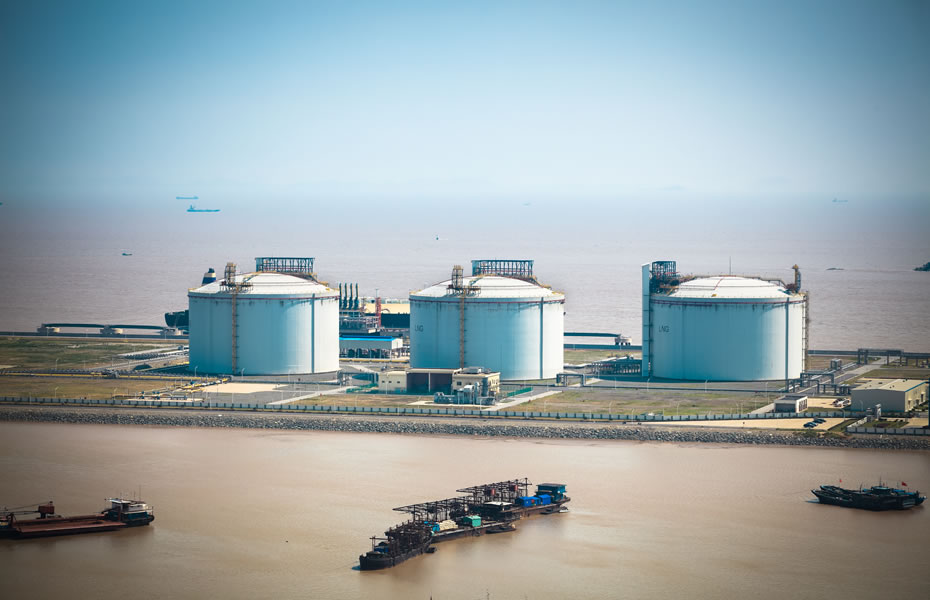
Tanks for LNG in the port of Shanghai, China
According to Arkadi Nachimowski, Managing Partner and Head of J.P Morgan’s Chemicals Investment Banking for the EMEA, in the past five years capital expenditure, R&D and M&As accounted for 43%, 10% and 16% of the cash flows of petrochemicals companies, respectively, with the remainder used for distributions to shareholders.
Mr Hughes places his expectations on the New Silk Road, a project aimed at reducing logistics costs for goods transported from the East to the West. The success of this geopolitical initiative will be a new important catalyst for the growth of China's economy.
Today’s petrochemical industry is influenced not only by market-related drivers: non-tariff measures in international trade, overloaded ports, underfinanced infrastructure projects and growing protectionism are also serious challenges. The GPCA Forum participants emphasised the importance of an open market policy, raising concerns about the intentions of US President-elect Donald Trump to revise the existing free trade agreements.
Wood Mackenzie’s VP, Head of Chemicals Research Alex Lidback believes that in a cheap oil environment efficiency and optionality are becoming the key business growth drivers. Companies need to cut their operating costs, reduce downtime, and develop flexible maintenance and repairs schedules. Significant investments are required in technological renovation, efficiency of logistic chains and development of a global feedstock and materials procurement framework, along with enhanced control over cost budgets and implementation of investment projects.
J.P. Morgan expects that shrinking free cash flows will push producers to look for opportunities to improve efficiency. As a result, capital spending in the coming years will be going down in favour of innovations and M&As. The consolidation will let companies cut costs through synergies, streamline their product mix, and reduce earnings volatility.
But most importantly, transition to products with higher added value will help move away from the commodity business model. The GPCA agree that M&As will be a key element of business strategies for Middle Eastern companies.
Speaking about the potential for oil and gas price to recover, Wood McKinsey’s Vice President for Refining, Chemicals and Oil Markets Alan Gelder noted that low demand and technological innovation development in the consuming industries are going to put pressure on the market in the short and long term, respectively – hence no guarantee that the Middle Eastern companies will regain their competitive edge as producers with low cost feedstock.
The crisis has clearly demonstrated that the future of the Middle East’s petrochemical industry lacks support from the fundamental factors of sustainability. By increasing exports to China and neglecting innovation and M&As, local producers have been accumulating risks for years, and given today's increased competition in the petrochemical industry, it will be very hard for them to turn the tide. And if they fail to adjust, their place in the global market will be quickly captured by more forward-thinking rivals, including those from Russia.
Based on GPCA’s materials
Download PDF