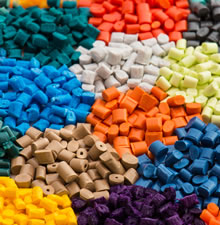
This July, Japan’s Funai Electric announced ceasing production of VHS-compatible video cassette recorders. It was the world's last manufacturer of VCRs that has now closed the last factory. The era of magnetic tape video recording has sunk into oblivion. This is in fact a milestone event illustrating the speed of changes and their impact on the world.
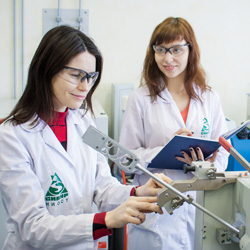
SIBUR's key focus areas in R&D:
- Development of technologies to produce new products and searching for alternative methods to produce existing materials and substances
- Expansion of the range of product grades produced by the Company – new grades of polypropylene, polyethylene and synthetic rubbers
- Production processes optimisation projects
A huge industry emerged right in front of our eyes and then transformed beyond recognition. VCRs and later DVD-players gradually disappeared. Whole industries, once producing millions of these devices, are now vanishing. No more video rental stores. No more tape camcorders. They are replaced by new solutions that, in turn, will soon be replaced by newer ones.
The modern economy is the economy of innovation. To win the competition today one needs to foresee the future and offer customers not only what they want today, but something they might want tomorrow. Figuratively speaking, SIBUR’s Development Unit is here to see the future. It is meant to create new solutions that will be in demand tomorrow and will replace foreign ones. These include both short-term projects to expand SIBUR’s product portfolio and development of new technologies and products to replace or upgrade the existing production processes in the long run. In addition to expanding the product grade range, there is a need to develop efficient technologies to process petrochemical feedstock and cut production costs.
The Development Unit manages R&D centres in Tomsk (NIOST) and Voronezh (R&D Centre of SIBUR’s Voronezh production site), where proprietary technologies are developed – from R&D creation to implementation.
This year, having estimated the development prospects and the current economic environment, SIBUR has identified several growth areas for its R&D.
The first one, which is currently the most relevant for the Company and our clients, is Product Development. Its main object is to promote the development of new grades of polymers. Within a year of our joint efforts with SIBUR’s Basic Polymers Division we have introduced more than 10 grades of polypropylene for various segments: extrusion blow molding, thermoforming, BOPP- films, cast films. A new improved catalyst that yields monomers of higher quality was introduced at the NNP Neftekhimiya site. All of the above was well received by our clients.
In the longer term, the Company expects strong impact from two large-scale projects such as creation of a Technical Centre for the Development and Application of Polyolefins (TTSRPP) in Moscow and the Centre for the Synthesis of Polyolefins (TSSPO) in Tomsk. The first one will demonstrate that SIBUR can not only produce polymers, but offer high-quality technical solutions and advice on polymer processing. TTSRPP plans to use mini production lines to manufacture end products demonstrating high quality of the grades produced by SIBUR to its clients.
GOING FORWARD, SIBUR PLANS TO TRANSFORM THE DEVELOPMENT OF PROPRIETARY POLYMER PRODUCTION TECHNOLOGIES INTO A SEPARATE BUSINESS. IT IS A CAPITAL AND LABOUR INTENSIVE ENTERPRISE.
TSSPO will considerably reduce the costs of introducing new polypropylene grades at SIBUR's polyolefin production sites. We will be able to develop a certain number of polypropylene grades and run part of our experimental production not at the Company’s production facilities, but using small units at the Centre, which are more flexible and easier to manage, thus reducing the implementation time. These tools will also enable the Company to speed up the development of innovative grades and offer clients a whole range of new products.
Both centres will become a base for ZapSibNeftekhim complex, which is currently under construction near Tobolsk. Taking part in the project is one of the main focus areas for SIBUR’s R&D. In cooperation with SIBUR's dedicated units, we analyse competitors’ proposition and foreign analogues, and conduct market surveys so that once the production site is on stream we could offer innovative products demanded by consumers.
The changing economic climate, turbulence in the oil and gas market, geopolitical challenges, and import substitution policy create favorable conditions for a significant step towards increasing the share of hydrocarbon processing and producing competitive petrochemical products that will first push out imports and then compete in foreign markets. It is a good window of opportunities and our ambition is to take advantage of it.
Download PDF